For nordic spas & ski
A warm room in a cold world.
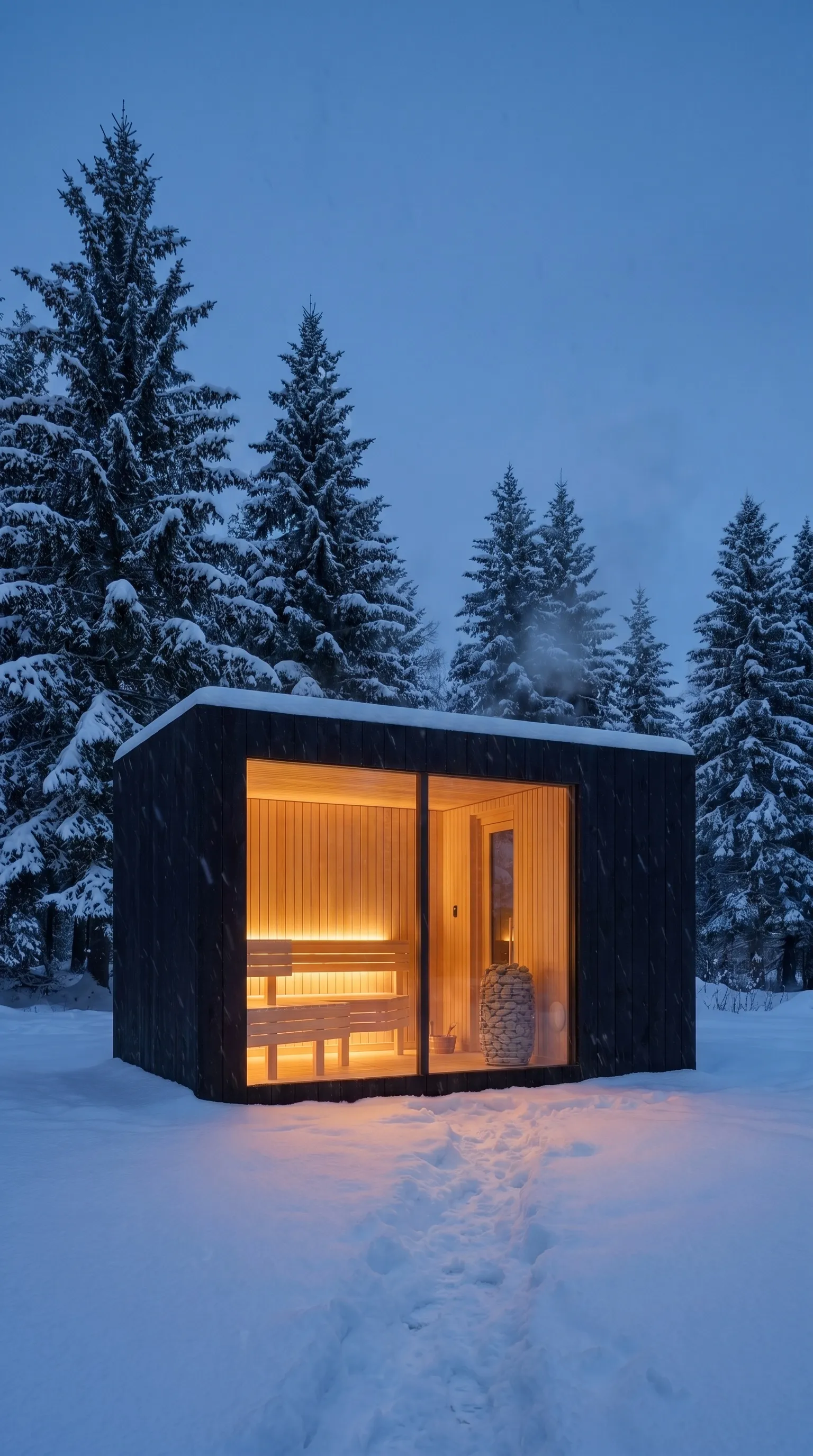
Cold-climate duty on six reversible screw piles — ground that concrete can't reach, standing 80°C inside at -10° out.
Cold is the design case
What -10° outside asks of the cabin.
-
80°C, held
Sustained interior temperature at -10°C outside — 80 mm of rock-wool (λ 0.034) and a sealed glazing detail doing the quiet work.
-
Boards that don't move
ThermoWood-D cladding absorbs under 10% moisture, so a season of freeze-thaw doesn't open the joints or cup the face.
-
A roof outliving the lease
Single-ply EPDM membrane, 50-year manufacturer warranty — the material commercial flat roofs use where snow sits for months.
-
Salt-air variant, named
Marinas and coastal venues take 316-grade stainless hardware and the Millboard cladding option — a specified variant, not a custom job.
The same envelope serves temperate wind-and-rain properties — the circuit runs year-round in any weather, not only alpine cold.
Where it can actually go
Slopes and shorelines are the point, not the problem.
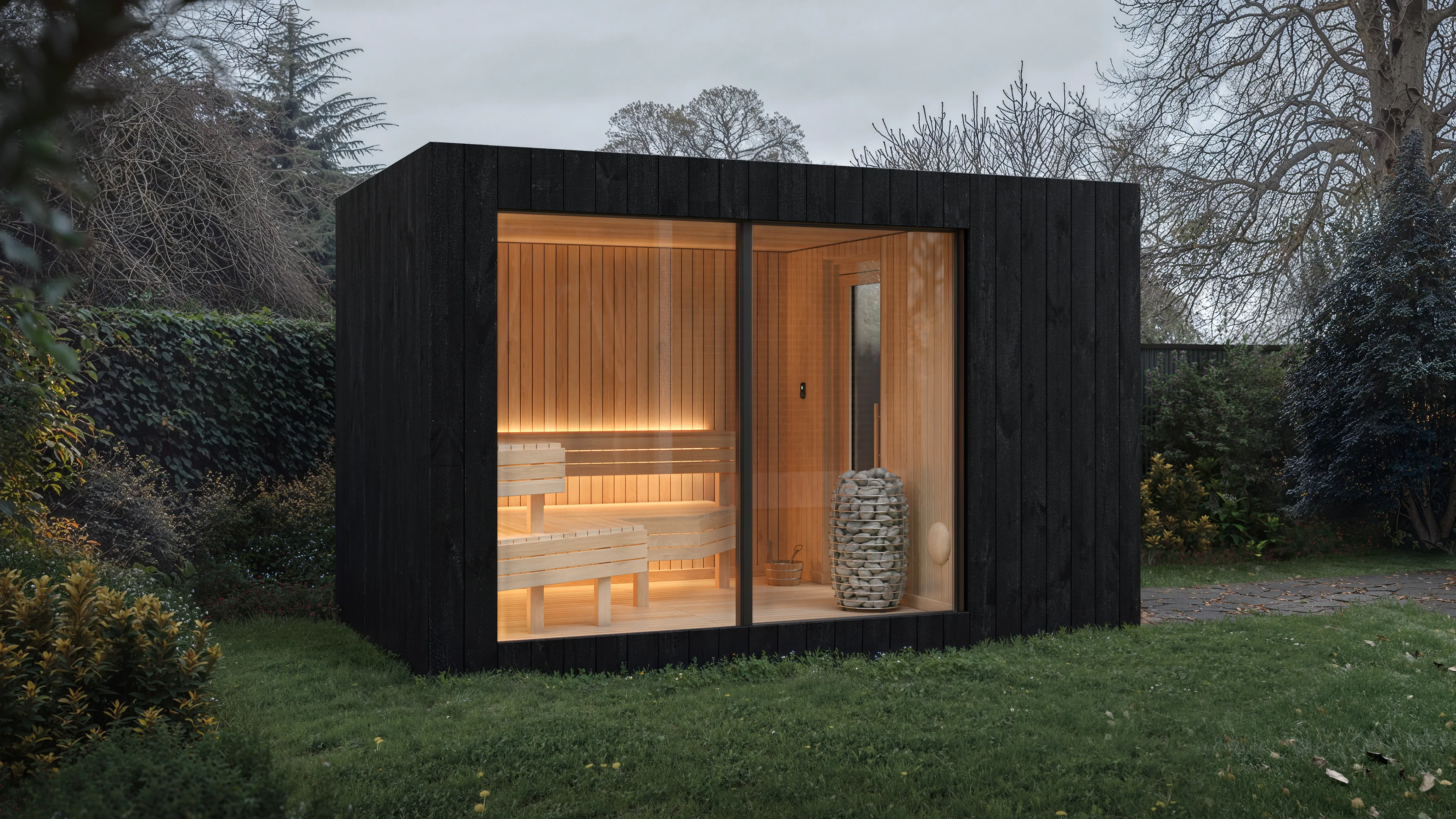
The sites that make a Nordic circuit worth photographing — the lakeshore, the ridge below the treeline, the deck beside the slips — are exactly the sites a concrete foundation rules out. Six helical piles reach 1.5–2.5 m into soft or seasonal ground, tolerate a 15° slope, and go in over a single morning without opening the earth.
The install is a crane lift of under two hours, sequenced for your off-season so the circuit opens with the snow instead of missing it. And because the piles reverse, a concession or shoreline license that ends doesn't strand the asset — the cabin moves to the next site.
Building more than one room? The wellness spaces →
Spacing the loop before you order? Nordic spa circuit design: stations, distances, throughput →
New to the format, or explaining it to someone who is? What a Nordic spa is: the circuit, the cost, the build →
The math, on your numbers.
Estimated annual incremental revenue
$—
- Payback period
- — months
- Investment
- $—
Arithmetic on the figures you enter — not a revenue forecast or guarantee. This counts direct session revenue only; it excludes day-circuit admission and seasonal effects — model those on your own numbers — plus operating cost, financing, and tax.
The cold-climate credentials, in writing.
- ThermoWood-D Heat-treatment class Thermo-treated wood cladding, 190°C — dimensionally stable outdoors
- 50-year EPDM membrane warranty Held with the membrane manufacturer
- Rating A Energy rating, verified 80 mm rock-wool, λ 0.034 W/mK
The circuit dossier: terrain first, stations second.
Pile engineering for your slope or shoreline, the cold-climate materials evidence, crane-access planning, and the multi-station scope if the sauna is your circuit's first move.
- Full material specification + supplier certificates
- Electrical, foundation, and structural-load drawings
- Per-property ROI model (your ADR, occupancy, unit count)
- Lead-time + install-day sequence, base by base
What circuit operators ask before the dossier
-
Can it install on a slope, a deck edge, or a shoreline?
The helical-pile foundation tolerates slopes to 15° and reaches 1.5–2.5 m embedment for stability in soft or seasonal ground — the same engineering logic dock and boardwalk builders use on waterfronts. No excavation, no poured slab, no concrete truck up the mountain road. Site access for the crane lift is usually the only siting question that matters.
-
How does it perform in a real winter?
The cabin holds a sustained 80°C interior at -10°C outside. ThermoWood-D cladding absorbs under 10% moisture, so freeze-thaw cycling doesn't open the boards; the EPDM roof membrane carries its manufacturer's 50-year warranty; glazing is EN 12150 tempered. Cold climate isn't the stress case for this cabin — it's the design case.
-
We're building a circuit, not buying one sauna. How does that work?
The sauna anchors the circuit; the NOOK 10 single room configures as a treatment or quiet room, and the NOOK 20 as a changing room or studio — all on the same piles and the same production rhythm. We scope station order, walking distances, and cold-station placement as one composition — see the wellness-spaces page for the full catalogue of rooms.
-
What about salt air at a marina or coastal site?
Coastal builds specify 316-grade stainless hardware in place of the standard 304, and the Millboard composite cladding upgrade is available where salt exposure argues against timber. Flag the coastal condition at scoping and the specification adjusts — it's a named variant, not a custom project.
-
Can guests book it as a stand-alone session?
That's the sector's standard model: a timed circuit entry (heat, cold, rest, repeat) sold as a session, with private whole-cabin hires at a premium. The HUUM heater schedules against your booking system so the cabin is at temperature when the first entry starts, every day of the season.
Describe the terrain. We'll answer the foundation question.
A 30-minute call on your slope, shoreline, or deck — then the circuit dossier with the pile engineering and the season-opening install sequence.
Nordic spas, thermal-circuit day venues, ski resorts, marinas, lake clubs.